Heart hospital in Jalandhar: FFR-guided angioplasty, ECP therapy and medicine-first care for stable heart disease, plus 24x7 angioplasty for heart attacks.
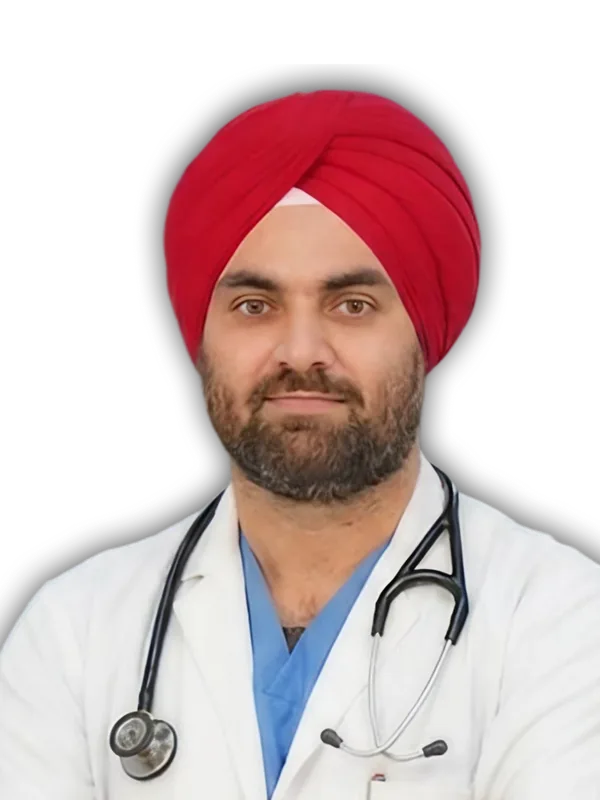
The cardiology department diagnoses and treats coronary artery disease, heart attacks, heart failure, heart-rhythm problems and high blood pressure. Consultations are with interventional cardiologist and diabetologist Dr. Gurbir Singh Gill. The department works to one principle: in stable heart disease, a stent or bypass is offered when the evidence shows it will help that particular patient, and medicines, ECP and risk-factor control are pursued properly when it will not. A heart attack is the exception — it is treated with emergency angioplasty in the cath lab, without delay.
Comprehensive cardiology care including non-invasive diagnostics, advanced angioplasty, pacemaker implantation, and coronary artery bypass surgeries, providing 24/7 cardiac emergency protocols.
Medicine First in Stable Heart Disease — a Stent When It Will Help
A blockage reported as "70%" or "90%" describes how narrow an artery looks on an angiogram. It does not say whether that narrowing is starving the heart of blood, whether it explains your symptoms, or whether opening it will help you live longer. In stable coronary disease, large randomised trials — COURAGE (2007), FAME 2 (2012) and ISCHEMIA (2020) among them — found that adding a stent to good medical therapy did not reduce death or heart attack, although it can relieve angina.
The No-Stent Protocol applies that evidence. It is not a refusal to stent: it is a set of questions answered before deciding.
Who it suits
People with stable chest pain or breathlessness on exertion, not a heart attack.
Patients told after an angiogram or CT scan that they need a stent, who want to know whether it will help them.
People with diabetes and stable coronary disease — where controlling the metabolic disease matters as much as the artery.
Patients whose blockages are borderline, or who are not suited to, or do not want, a procedure.
The tests
TMT (treadmill stress test)
Shows whether the heart runs short of blood on exertion — the symptom-provoking situation a resting ECG cannot capture.
2D echocardiography
Ultrasound of the heart: pumping strength, valves, and areas of muscle that move poorly because of reduced blood supply.
FFR (fractional flow reserve)
A pressure wire passed during angiography measures whether a narrowing actually restricts flow. An FFR of 0.80 or below marks a blockage that is limiting blood supply; above that, a stent is unlikely to help.
Risk-factor tests
Lipid profile, HbA1c and blood pressure — the targets that medical therapy is measured against.
Treatment options
Medicines
High-intensity statin to an LDL target, antiplatelet therapy, blood-pressure and sugar control, and anti-anginal drugs — titrated and reviewed, not prescribed once and forgotten.
ECP therapy
Enhanced external counterpulsation: a 35-session, non-invasive outpatient course for angina that persists despite medicines.
Lifestyle
Stopping tobacco, structured exercise, weight and diet change suited to Punjabi meals, and regular follow-up to check the targets are met.
When a stent or bypass is still needed
A heart attack (STEMI) or high-risk acute coronary syndrome — emergency angioplasty, without delay
Significant left-main disease, or severe multi-vessel disease, especially with diabetes or a weak heart — usually bypass surgery (CABG)
Angina that still limits daily life despite well-delivered medical therapy
A blockage confirmed by FFR or stress testing to restrict flow, with symptoms that match it
Chest pain lasting more than a few minutes, spreading to the arm, jaw or back, with sweating or breathlessness, is an emergency — call +91 98550 00028 or come straight in.
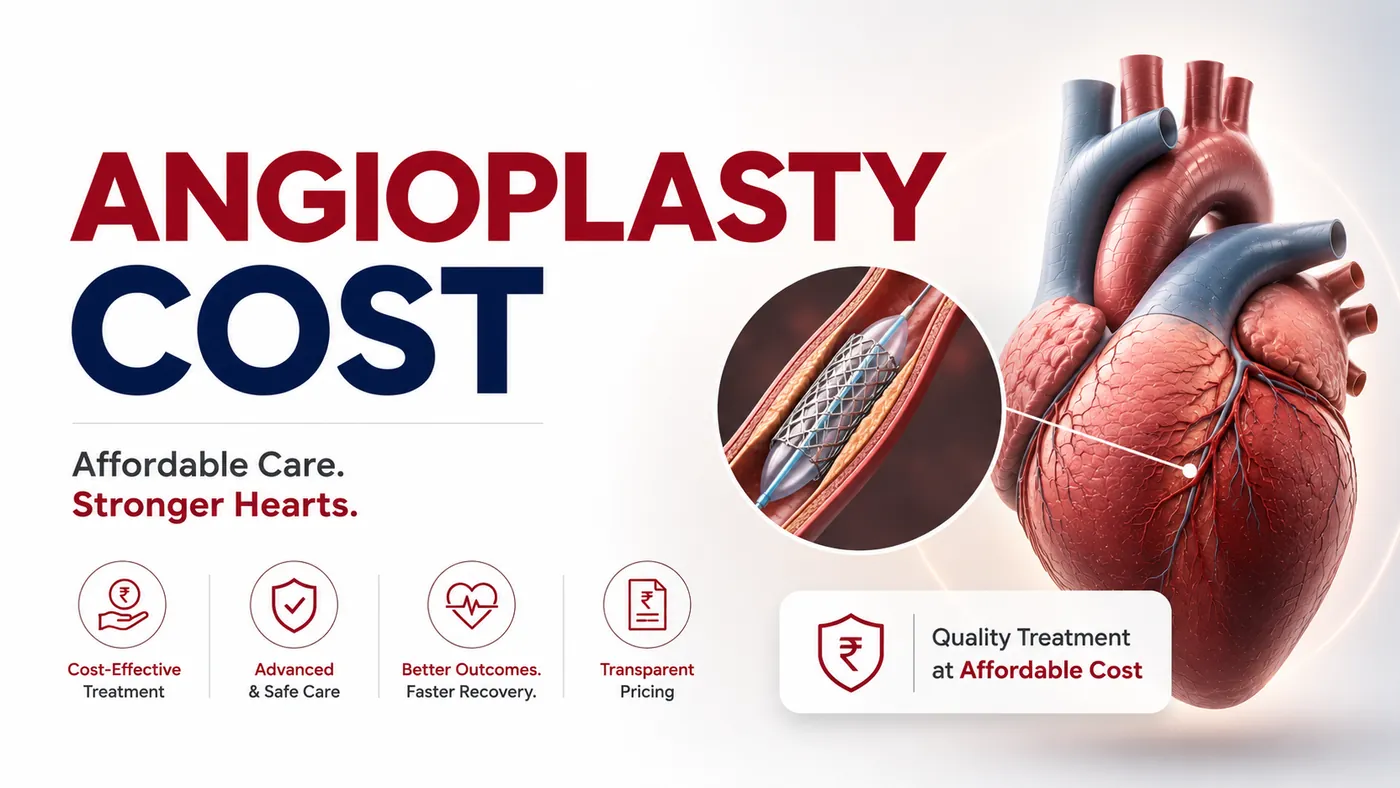
Coronary angiography maps the heart's arteries with contrast dye and X-ray, usually through the wrist. If a blockage is significant, angioplasty opens it with a balloon and, in most cases, a drug-eluting stent in the same sitting.
Coronary Artery Bypass Surgery (CABG)
Open-heart surgery that routes blood around blocked coronary arteries using a vein from the leg or an artery from the chest wall. Considered for left-main disease, multi-vessel disease (especially with diabetes) and blockages unsuitable for stenting.
Pacemaker Implantation
A small device placed under the skin below the collarbone, with leads to the heart, that stops the heartbeat falling too slow. Used for heart block and sick-sinus syndrome; usually a short procedure under local anaesthesia.
24-Hour Heart Monitoring
A Holter monitor records every heartbeat for 24 hours or longer while you go about your day, catching irregular rhythms a 10-second clinic ECG can miss. Ambulatory blood-pressure monitoring does the same for BP.
Indicative ranges for planned treatment. Your estimate depends on the implants or stents used, room category and your medical condition, and is given before admission. Cashless under Ayushman Bharat (PMJAY), CGHS, ECHS, ESI and empanelled insurers, subject to scheme rules and pre-authorisation. Call +91 98550 00028 for a current quote.
Heart Care for Patients from Across Punjab
Patients regularly come to Oxford Hospital for heart treatment from towns across Doaba and beyond. The hospital is at 305 Lajpat Nagar, near Nakodar Chowk in Jalandhar, close to the NH-44 and the Nakodar road.
Kapurthalaabout 20–25 km
Phagwaraabout 20–25 km
Hoshiarpurabout 40 km
Nawanshahrabout 55–60 km
Ludhianaabout 55–60 km
Mogaabout 70–80 km
Amritsarabout 70–80 km
For a planned visit or a second opinion, send your ECG, echo or angiography report on WhatsApp to +91 98550 00028 before travelling, and the team will tell you what to bring and which day to come. Treatment is cashless under PMJAY, CGHS, ECHS and major insurers wherever you live. In a heart attack, go to the nearest hospital with a cath lab immediately rather than travelling far.
"Three different hospitals told me I needed a triple bypass. My LAD was reported as "90% blocked". Oxford's team ran an FFR study — turned out the lesion wasn't flow-limiting. They started me on optimal medical therapy and 35 sessions of ECP. Two years later, I'm climbing the stairs to my fields without breathlessness. No stent. No bypass.
Bhupinder Singh
64 · Hoshiarpur · Treated 2024
Primary Angioplasty · ECHS
"I am an ECHS card holder from the local Polyclinic. After my heart attack in February, my son drove me straight to Oxford instead of waiting for a referral. The cath lab was ready in 30 minutes. The ECHS desk handled the paperwork — my family didn't make a single round. The rehab nurse called us every Thursday for two months after discharge.
Capt. (Retd.) Surjit Singh Bains
71 · Kapurthala · Treated 2025
Outcomes vary patient to patient. Quotes published with explicit written consent.
Patient Resources
Cardiology & Cardiac Surgery FAQs
Look for four things: a cardiologist available every day, a cath lab for emergency angioplasty during a heart attack, an honest second opinion before any stent or bypass, and cashless cover under your scheme. Oxford Hospital, 305 Lajpat Nagar near Nakodar Chowk, offers all four — interventional cardiologist Dr. Gurbir Singh Gill, a 24x7 emergency department, medicine-first care for stable heart disease, and cashless treatment under PMJAY, CGHS, ECHS and major insurers. Call +91 98550 00028.
Yes. Patients regularly come from Kapurthala and Phagwara (about 20–25 km), Hoshiarpur (about 40 km), Nawanshahr and Ludhiana (about 55–60 km), and Moga and Amritsar (about 70–80 km). The hospital is near Nakodar Chowk, close to the NH-44 and the Nakodar road. Send your ECG, echo or angiography report on WhatsApp to +91 98550 00028 before travelling and the team will tell you what to bring. In a heart attack, go to the nearest cath-lab hospital immediately rather than travelling far.
It depends on whether the disease is stable or a heart attack is happening. During a heart attack, the artery is opened at once with emergency angioplasty. In stable disease, a 90% narrowing usually does limit blood flow, and the options are medicines, angioplasty with a stent, or bypass surgery when several arteries or the left main artery are involved. The choice rests on symptoms, a stress test or FFR, and how many arteries are affected — the cardiologist explains each option before you decide.
Plaque rarely disappears completely, but it can be stabilised and partly shrunk, and symptoms can be controlled without surgery in many people with stable disease. That takes high-dose cholesterol medicine, control of blood pressure and diabetes, stopping smoking, exercise and diet — and, for persistent angina, ECP therapy. A heart attack or unstable chest pain is different and needs urgent treatment.
Yes, if you have stable coronary artery disease. The decision is based on your symptoms, a stress test (TMT or stress echo) and, during angiography, FFR — a pressure measurement that shows whether a blockage actually restricts blood flow. Many patients are treated with optimal medical therapy, ECP for persistent angina, and control of cholesterol, blood pressure, sugar and smoking. A stent or bypass is still advised for a heart attack, left-main or severe multi-vessel disease, or angina that medicines cannot control.
Not automatically. The percentage describes how narrow an artery looks, not whether it starves the heart of blood. In stable disease, large trials such as COURAGE and ISCHEMIA found that adding a stent to good medical therapy did not reduce death or heart attack, although it can relieve angina. FFR helps decide which blockages need treatment. During a heart attack, the opposite applies — emergency angioplasty saves heart muscle and should not be delayed.
Dr. Gurbir Singh Gill, an interventional cardiologist and diabetologist, sees cardiology patients at Oxford Hospital. His consulting hours are Monday to Thursday, 7:30 AM to 5 PM. Book on +91 98550 00028 (call or WhatsApp). Cardiac emergencies are seen 24x7.
Indicatively, single-vessel angioplasty with one drug-eluting stent costs ₹1.5L–₹2.2L, and two-vessel angioplasty ₹2.5L–₹3.2L. The final amount depends on the number and type of stents, the room category and length of stay; you receive an estimate before the procedure. Angioplasty is cashless under PMJAY, CGHS, ECHS, ESI and major insurers.
Usually an ECG, a 2D echocardiogram to assess pumping and valves, a TMT (treadmill stress test) to see whether the heart is short of blood on exertion, and blood tests for cholesterol and sugar. A 24-hour Holter monitor is used for palpitations. Coronary angiography is done when the results, or your symptoms, point to significant disease — and FFR can be measured during it.
Enhanced external counterpulsation (ECP) is a non-invasive outpatient treatment. Cuffs on the legs inflate in time with your heartbeat, increasing blood flow to the heart. A course is usually 35 one-hour sessions over about seven weeks. It is used for chronic stable angina that continues despite medicines, especially in patients who are not suited to, or do not want, a stent or bypass.
Yes. Pacemakers are implanted for slow heart rhythms such as heart block, and implantable cardioverter-defibrillators (ICDs) for patients at risk of dangerous fast rhythms. Both are usually done under local anaesthesia, with a short hospital stay.
Yes. The emergency department is open 24x7 and the cath lab is used for emergency angioplasty during a heart attack. Chest pain lasting more than a few minutes, pain spreading to the arm, jaw or back, breathlessness, sweating or fainting needs emergency care — call +91 98550 00028 or come straight in.
Health Library
Cardiology & Cardiac Surgery Insights & Patient Guides