
When "Acidity" Isn't Acidity: What Years of Self-Medicating Can Hide
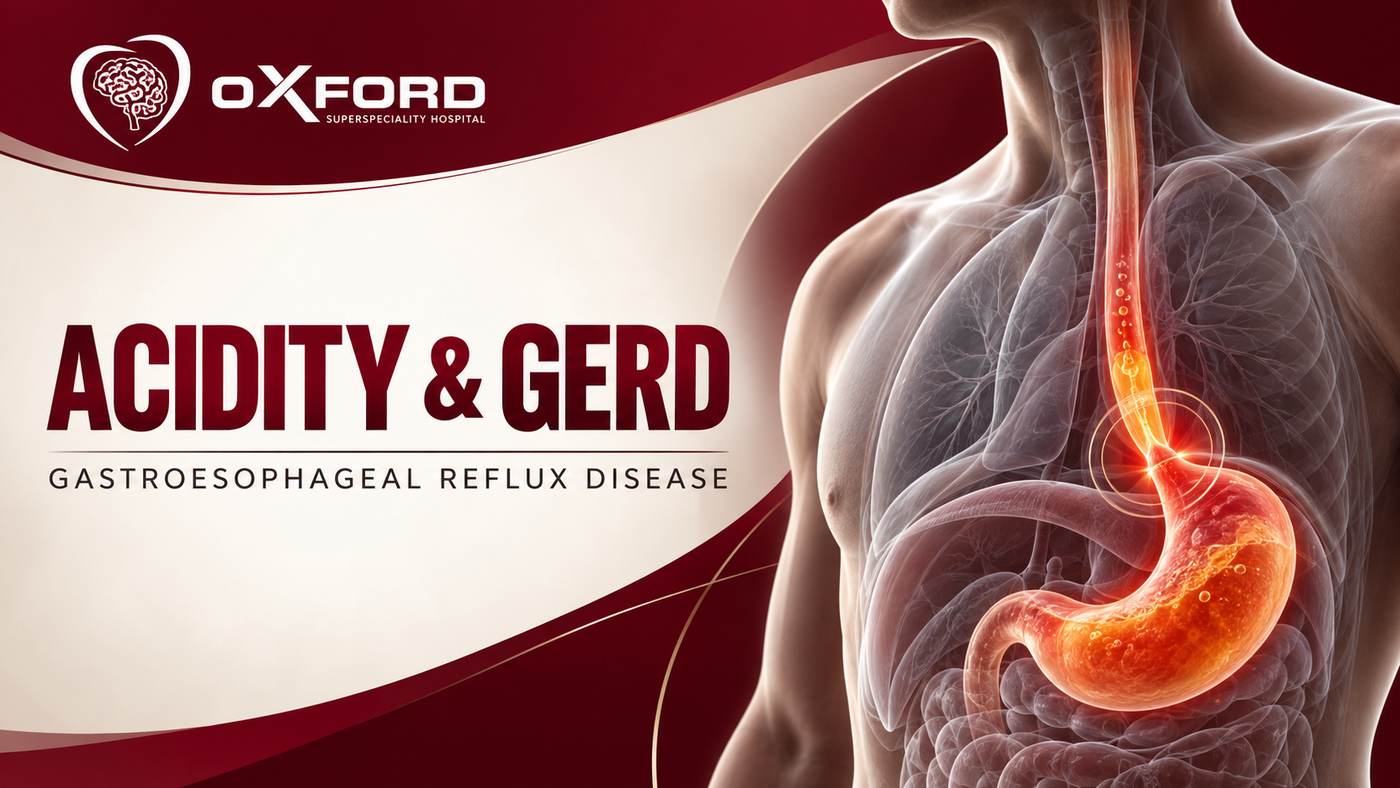
About 15.6% of Indians have GERD. Chest pain treated as acidity is one of the most dangerous assumptions in medicine — and there is no universal diet that fixes reflux.
"Acidity" is what most people in Punjab call burning, sourness, bloating or discomfort after eating. Medically those symptoms have several possible causes. Gastroesophageal reflux disease (GERD) is one of the most common.
GERD occurs when stomach contents repeatedly flow back into the oesophagus, the tube carrying food from mouth to stomach. The lower oesophageal sphincter normally acts as a valve preventing this. When it relaxes inappropriately or becomes less effective, reflux irritates the oesophagus and produces symptoms.
A 2021 meta-analysis covering more than 20,000 people found a pooled GERD prevalence of about 15.6% in India, with considerable variation between studies. Higher age and BMI, tobacco and alcohol use, tea or coffee consumption and certain dietary patterns were all associated with greater risk.
Chest pain is never automatically acidity
This deserves to come before everything else, because getting it wrong kills people.
Severe or unexplained chest pain — especially with breathlessness, sweating, or pain spreading to the arm or jaw — requires urgent medical assessment. Heart disease produces symptoms that can feel exactly like severe acidity. An antacid providing partial relief does not rule out a cardiac cause.
If in doubt, come to an emergency department. A cardiac workup that turns out negative is a good outcome; a heart attack treated as indigestion is not.
Symptoms
The classic symptoms are heartburn and regurgitation. Heartburn is a burning sensation behind the breastbone. Regurgitation is the sensation of acidic or bitter stomach contents coming back into the throat or mouth. Both often worsen after large meals, when bending over, or when lying down.
Some patients instead experience chest discomfort, difficulty swallowing, a sensation of something stuck in the throat, chronic cough or hoarseness.
Recent research suggests women with GERD may report more severe symptoms and greater effect on quality of life, while men can show greater measured acid exposure and a higher prevalence of Barrett's oesophagus in some populations. This does not mean GERD is a different disease by sex — it means symptoms should be assessed individually.
Warning signs that need evaluation, not another antacid
- Difficulty swallowing, or food sticking
- Persistent vomiting
- Vomiting blood
- Black stools
- Unexplained weight loss
- Anaemia
Any of these warrants medical evaluation rather than continued self-treatment.
What raises the risk
Excess body weight is one of the strongest modifiable risk factors — abdominal fat increases pressure around the stomach and makes reflux more likely. Hiatal hernia, where part of the stomach moves through the diaphragm, weakens the barrier against reflux. Smoking, alcohol, large meals, high-fat foods and eating close to bedtime all worsen symptoms. Pregnancy increases reflux through hormonal change and pressure from the growing uterus.
Some medicines aggravate reflux. Patients with persistent symptoms should discuss their medication list with a doctor rather than stopping prescribed medicines themselves.
Which treatments work
Treatment depends on symptoms and on whether there is confirmed oesophageal damage.
Occasional, mild heartburn. Antacids give rapid short-term relief. H2-receptor blockers reduce acid production and last longer.
Frequent symptoms or erosive GERD. Proton pump inhibitors (PPIs) provide stronger acid suppression and better healing, and remain the most effective standard medicines. Timing and duration affect how well they work, so they should be taken as instructed rather than as needed.
Current guidelines recommend using the lowest effective dose when long-term treatment is necessary — rather than avoiding PPIs because of concerns about potential adverse effects. The evidence does not support stopping a clinically indicated PPI without medical advice.
Night-time reflux. Avoid food for two to three hours before bed and elevate the head of the bed. A 2021 systematic review found head-of-bed elevation improved reflux symptoms across several trials, though the overall evidence had limitations. Sleeping on the left side may also reduce night-time reflux.
Surgery and endoscopic procedures. For patients with objectively confirmed reflux who remain symptomatic despite appropriate medical treatment, fundoplication, magnetic sphincter augmentation and newer endoscopic procedures such as transoral incisionless fundoplication are considered according to anatomy, reflux severity and specialist assessment. These are not substitutes for proper diagnosis.
There is no universal "GERD diet"
Coffee, chocolate, alcohol, carbonated drinks, fatty meals, tomatoes, citrus and spicy food trigger symptoms in some people. The effect varies enormously between individuals. Recent research supports personalised dietary change over blanket elimination.
Telling every patient in Punjab to permanently give up tea, chillies and citrus is neither evidence-based nor realistic. Identify your own triggers instead — keep a short food and symptom diary for two weeks and act on what it shows.
Common mistakes
Treating every episode of burning as "gas" and taking over-the-counter medicines repeatedly without establishing the cause. Assuming everyone must avoid spicy food, tea, coffee or fruit. Eating a very large dinner and going to bed soon after. Changing or stopping long-term prescription medicines without medical guidance.
Persistent symptoms despite treatment may mean incorrect timing, an alternative diagnosis, or a complication requiring investigation — not simply a higher dose. Some patients have non-erosive reflux disease, reflux hypersensitivity or another gastrointestinal condition entirely. Where diagnosis is uncertain, ambulatory pH or impedance monitoring and, in selected patients, endoscopy or oesophageal manometry identify the actual cause.
Complications
Untreated or poorly controlled GERD can cause oesophagitis, ulcers, bleeding and narrowing of the oesophagus called a stricture. Long-standing reflux can contribute to Barrett's oesophagus, a change in the oesophageal lining associated with increased risk of oesophageal cancer. A 2021 systematic review found Barrett's more common among people with reflux symptoms who also had certain risk factors, including hiatal hernia.
GERD affects more than digestion. Night-time reflux disturbs sleep, and a 2024 meta-analysis found a significant two-way association between GERD and sleep problems. Persistent symptoms interfere with eating, work, social life and general quality of life.
GERD assessment at Oxford Hospital Jalandhar
Our gastroenterology team investigates persistent reflux rather than escalating acid suppression indefinitely — endoscopy where indicated, and assessment for the alternative diagnoses that commonly hide behind years of self-treated "acidity". Treatment is cashless under PMJAY, CGHS, ECHS and major insurers.
GERD is usually very manageable. Correct diagnosis, appropriate medication and realistic lifestyle change provide substantial relief and protect the oesophagus from long-term damage.
This article has been medically researched and reviewed against current clinical guidelines and peer-reviewed research, but it shall not be taken as medical advice. Please see a qualified doctor if you have persistent heartburn, difficulty swallowing, unexplained weight loss, vomiting, bleeding or chest pain.
Disclaimer: This article is for informational purposes only and not a substitute for medical advice. Consult a healthcare professional for diagnosis, treatment, or concerns. Call us at +91 98550 00028 or Visit Oxford Hospital, Jalandhar.
Frequently Asked Questions
How do I know if chest pain is acidity or a heart attack?
You often cannot tell from symptoms alone, which is why chest pain should never automatically be attributed to acidity. Severe or unexplained chest pain — particularly with breathlessness, sweating, or pain spreading to the arm or jaw — needs urgent assessment. Partial relief from an antacid does not rule out a cardiac cause.
Is it safe to take PPIs long term?
Current guidelines recommend using the lowest effective dose when long-term treatment is necessary, rather than avoiding PPIs because of concerns about potential adverse effects. The evidence does not support stopping a clinically indicated PPI without medical advice.
Which foods should I avoid for acidity?
There is no universal GERD diet. Coffee, chocolate, alcohol, carbonated drinks, fatty meals, tomatoes, citrus and spicy food trigger symptoms in some people but not others. Recent research supports identifying your own triggers rather than eliminating large numbers of foods permanently.
Why is my acid reflux worse at night?
Lying flat allows stomach contents to move back into the oesophagus more easily. Avoiding food for two to three hours before bed and elevating the head of the bed both help. A 2021 systematic review found head-of-bed elevation improved reflux symptoms, and sleeping on the left side may also reduce night-time reflux.
When does acidity need an endoscopy?
When symptoms persist despite appropriate treatment, or when warning signs appear — difficulty swallowing, persistent vomiting, vomiting blood, black stools, unexplained weight loss or anaemia. Persistent symptoms may indicate incorrect timing, an alternative diagnosis or a complication rather than a need for a higher dose.
Can GERD cause cancer?
Long-standing reflux can contribute to Barrett's oesophagus, a change in the oesophageal lining associated with an increased risk of oesophageal cancer. This is why persistent reflux is worth diagnosing and treating properly rather than self-medicating for years.
Could not find what you are looking for?
Request a Callback
Helpline
+91 98550 00028
Available
24 / 7 — All Days
Location
305 Lajpat Nagar, Near Nakodar Chowk, Jalandhar, Punjab 144001
support@oxfordhospital.in