
Gallstones on Your Ultrasound? You Probably Don't Need Surgery
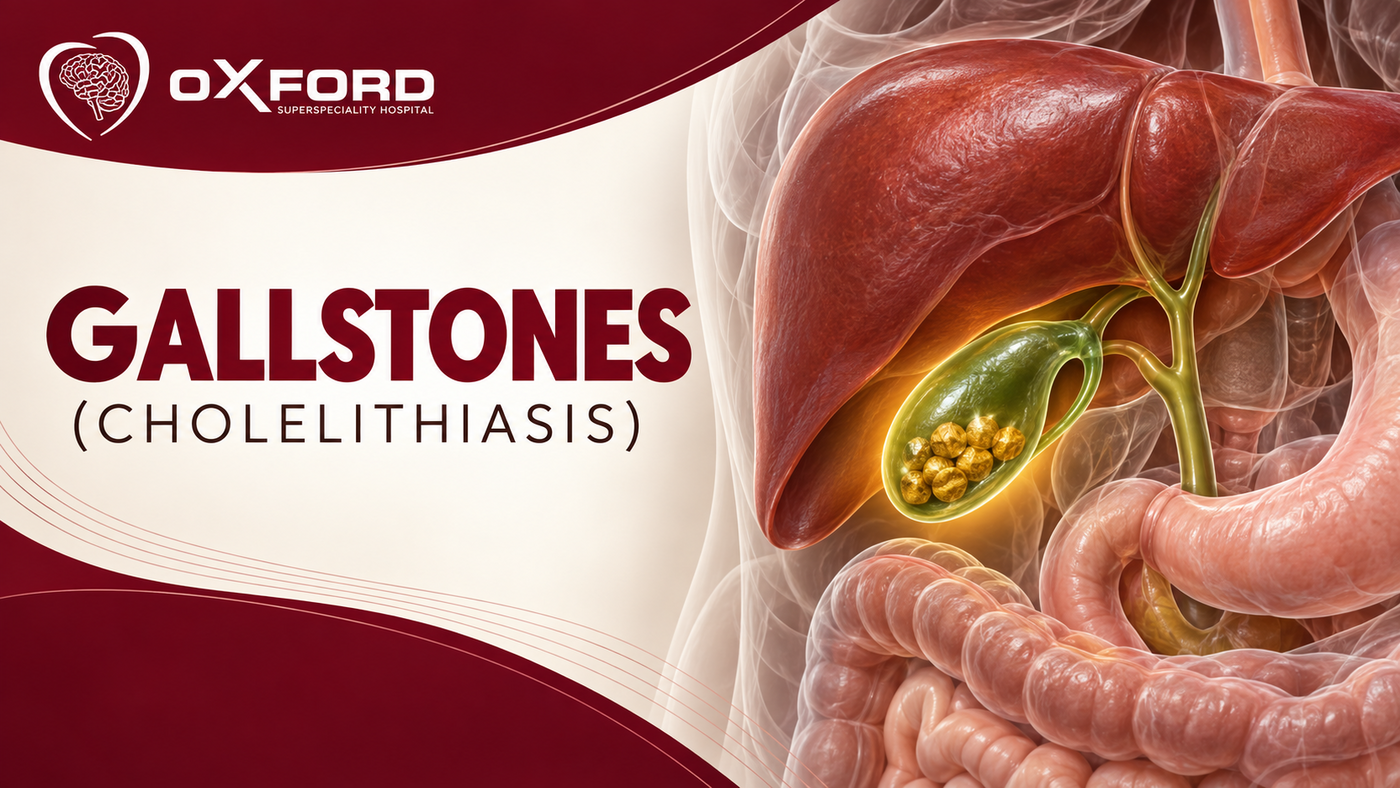
Most gallstones stay silent and never need treatment. North India carries a heavy burden of both stones and gallbladder cancer — so knowing which symptoms actually matter counts.
Gallstones — medically cholelithiasis — are hardened deposits that form when substances in bile crystallise inside the gallbladder. The gallbladder stores bile made by the liver and releases it into the small intestine to help digest fats. Stones can sit silently for years. When one blocks a bile duct, it causes severe pain and can cause serious complications.
Finding stones on an ultrasound does not mean you need surgery
This is the most common misunderstanding, and it sends people into operating theatres they did not need.
Many people have asymptomatic or "silent" gallstones and never require treatment. Most remain asymptomatic, so removing the gallbladder purely because stones appeared on a scan is usually unnecessary. Indian surgical literature published in 2024 found that most surveyed surgeons favoured observation for asymptomatic patients — though individual risk factors can change that decision.
The question is not "are there stones?" It is "are the stones causing symptoms or complications?"
Symptoms
When symptoms occur, the typical attack is sudden, intense pain in the upper right abdomen or the centre of the upper abdomen. It can spread to the back or right shoulder and last from several minutes to several hours. Nausea and vomiting are common.
Fever, chills, jaundice, dark urine, pale stools or persistent severe abdominal pain are warning signs. They can indicate inflammation, infection or a blocked bile duct, and need urgent assessment.
Symptoms are broadly similar in men and women, though women are roughly three times more likely to develop gallstones, with hormonal factors contributing to the difference.
What causes them
Most gallstones are cholesterol stones. They form when bile holds more cholesterol than it can keep dissolved, when the gallbladder does not empty effectively, or when other changes in bile chemistry encourage crystals. Pigment stones contain more bilirubin and are linked to chronic liver disease, biliary infection and disorders causing excessive breakdown of red blood cells.
The strongest risk factors are increasing age, female sex, obesity, diabetes, family history and rapid weight loss. Pregnancy and oestrogen exposure raise risk by increasing cholesterol in bile and reducing gallbladder emptying. Bariatric surgery and prolonged fasting contribute as well.
That rapid-weight-loss link is worth dwelling on, because crash dieting is common and the connection is not widely known. Weight loss should be gradual — losing weight too fast is itself a way of forming gallstones.
How they are diagnosed
Abdominal ultrasound is usually the first test: it detects stones and signs of gallbladder inflammation without radiation. Blood tests can identify infection, abnormal liver function or pancreatitis. If a stone is suspected in the common bile duct, doctors may use MRCP, endoscopic ultrasound, or ERCP when treatment is also required.
Which treatment works
Silent gallstones generally do not require surgery.
Recurrent biliary pain or symptomatic stones. Laparoscopic cholecystectomy is the standard definitive treatment. The entire gallbladder is removed rather than individual stones — this matters, because leaving the gallbladder behind allows new stones to form. Most people live normally without a gallbladder, since bile continues to flow from the liver into the intestine. Temporary diarrhoea or changes in bowel habit can occur afterwards.
Acute cholecystitis, where a stone causes prolonged blockage and inflammation, may first require intravenous fluids, pain relief and antibiotics where infection is suspected, followed by surgical treatment based on severity.
A stone in the common bile duct may need ERCP to clear the obstruction, usually followed by gallbladder removal. Gallstone pancreatitis requires hospital treatment, because obstruction of the pancreatic duct can trigger severe inflammation of the pancreas.
Medicines such as ursodeoxycholic acid can dissolve certain cholesterol stones, but treatment takes months or years and stones recur. It is generally reserved for selected patients who cannot have surgery.
Why this matters particularly in North India
India has substantial regional variation in gallstone disease, and recent community research has found particularly high burdens in northern and northeastern populations. A 2024 review described gallstone disease as widely prevalent across the country, with newer population work highlighting geographical variation rather than a single national pattern.
Rising obesity, diabetes, fatty liver disease and sedentary lifestyles create the metabolic conditions associated with cholesterol stones. Genetic susceptibility, family history, reproductive factors and regional dietary patterns contribute too. Importantly, the evidence does not support blaming any single Indian food or dietary practice for gallstones.
North India also carries a significant regional burden of gallbladder cancer. A 2024 Indian review reported that roughly 10% of the global gallbladder cancer burden occurs in India, with particularly high incidence in northern regions. Gallstones are frequently found in patients with gallbladder cancer — but the absolute risk of cancer among people with gallstones remains low, and the relationship is complex. This is a reason to take persistent symptoms seriously, not a reason for everyone with stones to panic.
Common mistakes
Assuming every abdominal pain after eating is gallstones. Ulcers, pancreatitis, liver disease and several other conditions produce similar symptoms.
Waiting through severe or persistent pain because previous attacks settled on their own. A stone can migrate into the common bile duct and cause obstruction, infection or pancreatitis. Fever, jaundice, chills or severe persistent pain should prompt urgent attention.
Assuming an ultrasound finding automatically means surgery — and equally, assuming diet alone will dissolve established stones. Lifestyle change reduces risk factors and supports recovery, but it does not reliably dissolve stones that have already formed.
What you can do
- Maintain a healthy weight, and lose weight gradually — rapid loss increases risk
- Avoid prolonged fasting and extreme crash diets
- Exercise regularly and eat adequate fibre
- If fatty meals repeatedly trigger pain, reducing very fatty food can make symptoms more manageable while you await assessment — but this is not a substitute for treatment when symptomatic stones are present
Gallstone surgery at Oxford Hospital Jalandhar
Our surgical team performs laparoscopic cholecystectomy and manages the complications that make gallstones urgent — acute cholecystitis, bile duct obstruction, cholangitis and gallstone pancreatitis — with 24x7 emergency cover and on-site intensive care. Where stones are silent and symptom-free, we will say so rather than operate.
Treatment is cashless under PMJAY, CGHS, ECHS and major insurers.
This article has been medically researched and reviewed against established clinical sources and recent research literature, but it shall not be taken as medical advice. If you are experiencing any of the symptoms mentioned, please see a qualified doctor for evaluation and treatment.
Disclaimer: This article is for informational purposes only and not a substitute for medical advice. Consult a healthcare professional for diagnosis, treatment, or concerns. Call us at +91 98550 00028 or Visit Oxford Hospital, Jalandhar.
Frequently Asked Questions
Do all gallstones need to be removed?
No. Many people have silent gallstones that never cause symptoms and never need treatment. Removing the gallbladder solely because stones were found on an ultrasound is usually unnecessary. Indian surgical literature from 2024 found most surveyed surgeons favour observation for asymptomatic patients, though individual risk factors can change that.
What are the warning signs of a gallstone emergency?
Fever, chills, jaundice, dark urine, pale stools, or persistent severe abdominal pain. These can indicate inflammation, infection or a blocked bile duct and need urgent assessment. A stone can migrate into the common bile duct and cause obstruction, infection or pancreatitis.
Can gallstones be dissolved without surgery?
Medicines such as ursodeoxycholic acid can dissolve certain cholesterol stones, but treatment takes months or years and stones can recur. It is generally reserved for selected patients who cannot undergo surgery. Diet and lifestyle change reduce risk factors but do not reliably dissolve established stones.
Why is only the gallbladder removed and not just the stones?
Leaving the gallbladder in place allows new stones to form. Laparoscopic cholecystectomy removes the entire gallbladder for that reason. Most people live normally afterwards because bile continues to flow directly from the liver into the intestine, though temporary diarrhoea or changes in bowel habit can occur.
Does rapid weight loss cause gallstones?
Yes. Rapid weight loss, prolonged fasting and extreme crash diets all increase the risk of forming gallstones, as can bariatric surgery. Weight loss should be gradual for this reason.
Do gallstones cause gallbladder cancer?
Gallstones are frequently found in patients with gallbladder cancer, and North India has a high regional incidence — a 2024 Indian review reported roughly 10% of the global burden occurs in India. However the absolute risk among people with gallstones remains low and the relationship is complex. It is a reason to take persistent symptoms seriously rather than a reason for alarm.
Could not find what you are looking for?
Request a Callback
Helpline
+91 98550 00028
Available
24 / 7 — All Days
Location
305 Lajpat Nagar, Near Nakodar Chowk, Jalandhar, Punjab 144001
support@oxfordhospital.in