
Stroke Prevention: Identifying Early Warning Signs (BE-FAST Guide)
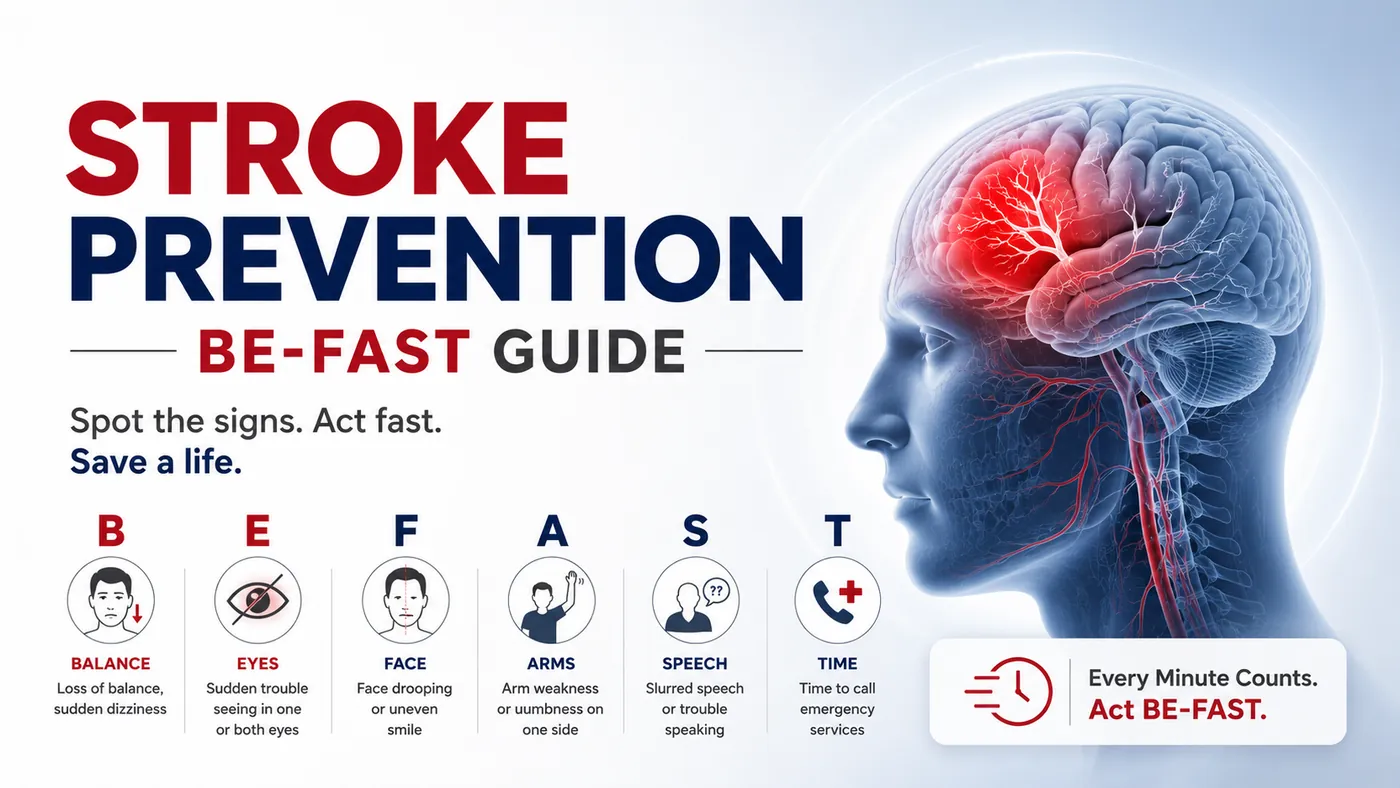
Recognizing stroke in the first 60 minutes saves brain. Oxford Hospital neurologists explain BE-FAST — the gold-standard symptom check used worldwide.
A stroke kills 2 million brain cells every minute. The first 60 minutes — the "golden hour" — decide whether the patient walks out or remains paralysed. Memorise BE-FAST. It saves lives.
BE-FAST — The Stroke Symptom Check
- BBalance: Sudden loss of balance, dizziness, falling.
- EEyes: Sudden blurred or double vision, blackout in one eye.
- FFace: One side droops when the person smiles.
- AArms: One arm drifts down when both are raised.
- SSpeech: Slurred, garbled or unable to repeat a simple sentence.
- TTime: Note the exact time symptoms started. Rush to a stroke-ready hospital immediately.
The 4.5-Hour Window
If a clot-buster (thrombolytic drug like Alteplase) is given within 4.5 hours of symptom onset, brain damage can be reversed in 60–70% of patients. Beyond this window, recovery odds collapse rapidly.
Why Oxford Hospital Is Punjab's Stroke-Ready Centre
- 24x7 stroke unit with neurologist on call
- In-house CT and MRI for door-to-imaging under 15 min
- Thrombolysis protocol — door-to-needle under 45 min
- On-site neurosurgery for haemorrhagic strokes
- Comprehensive rehab — physiotherapy, speech therapy, occupational therapy
Stroke Prevention — Modifiable Risk Factors
80% of strokes are preventable. Control blood pressure (target <130/80), manage diabetes (HbA1c <7), quit tobacco, treat atrial fibrillation, and exercise 150 min/week.
Suspect a stroke? Don't wait. Call Oxford Hospital emergency now: +91 98550 00028.
Disclaimer: This article is for informational purposes only and not a substitute for medical advice. Consult a healthcare professional for diagnosis, treatment, or concerns. Call us at +91 98550 00028 or Visit Oxford Hospital, Jalandhar.
Frequently Asked Questions
What are the warning signs of a stroke?
Use BE-FAST: sudden loss of Balance or coordination; Eye changes such as blurred or lost vision; Face drooping on one side; Arm weakness on one side; Speech that is slurred or confused; Time to call emergency services immediately. Any single sign appearing suddenly is enough to seek emergency care.
How quickly must a stroke be treated?
Clot-busting thrombolysis is generally given within 4.5 hours of symptom onset, and mechanical thrombectomy may extend that window in selected large-vessel cases. Outcomes worsen with every minute of delay because brain tissue dies rapidly. Oxford Hospital runs a 24x7 stroke pathway with a door-to-needle time under 45 minutes.
What should I do while waiting for the ambulance?
Note the exact time symptoms started — treatment eligibility depends on it. Keep the person lying on their side with the head slightly raised. Do not give food, drink or medication, including aspirin, because a bleeding stroke must be excluded on a scan first. Call +91 98550 00028 while en route so the stroke team is ready on arrival.
Who is most at risk of a stroke?
Risk rises with high blood pressure, diabetes, high cholesterol, atrial fibrillation, smoking, obesity, physical inactivity, heavy alcohol use, and a personal or family history of stroke or TIA. High blood pressure is the single largest modifiable contributor.
Can strokes be prevented?
A large share are preventable. Controlling blood pressure, managing diabetes and cholesterol, treating atrial fibrillation with appropriate anticoagulation, stopping smoking, staying active and moderating salt and alcohol all reduce risk substantially. Regular screening matters because hypertension and atrial fibrillation are often symptomless.
What is a TIA or mini-stroke?
A transient ischaemic attack produces stroke symptoms that resolve within minutes to hours without permanent damage. It is a serious warning: risk of a full stroke is highest in the days immediately afterwards. A TIA needs urgent assessment, not reassurance.
Could not find what you are looking for?
Request a Callback
Helpline
+91 98550 00028
Available
24 / 7 — All Days
Location
305 Lajpat Nagar, Near Nakodar Chowk, Jalandhar, Punjab 144001
support@oxfordhospital.in